

OAK Community Update - May
We were delighted to welcome dendrochronologists Ross and Glyn from ArcheoDomus earlier this month for investigations to try to establish the true age of The Oxford Arms. Our volunteer history researcher Annie Gamble has compiled documentary evidence that traces the history of The Oxford back as far as 1706. Historians of Kington have asserted that the building dates back at least as far as the 17th century, while the history plaque on the wall of Kington Library claims that The Oxford “has 13th century origins”. Unfortunately, we don’t have any records that attest to the validity of this last claim, and only archaeology and science can hopefully give us an answer.
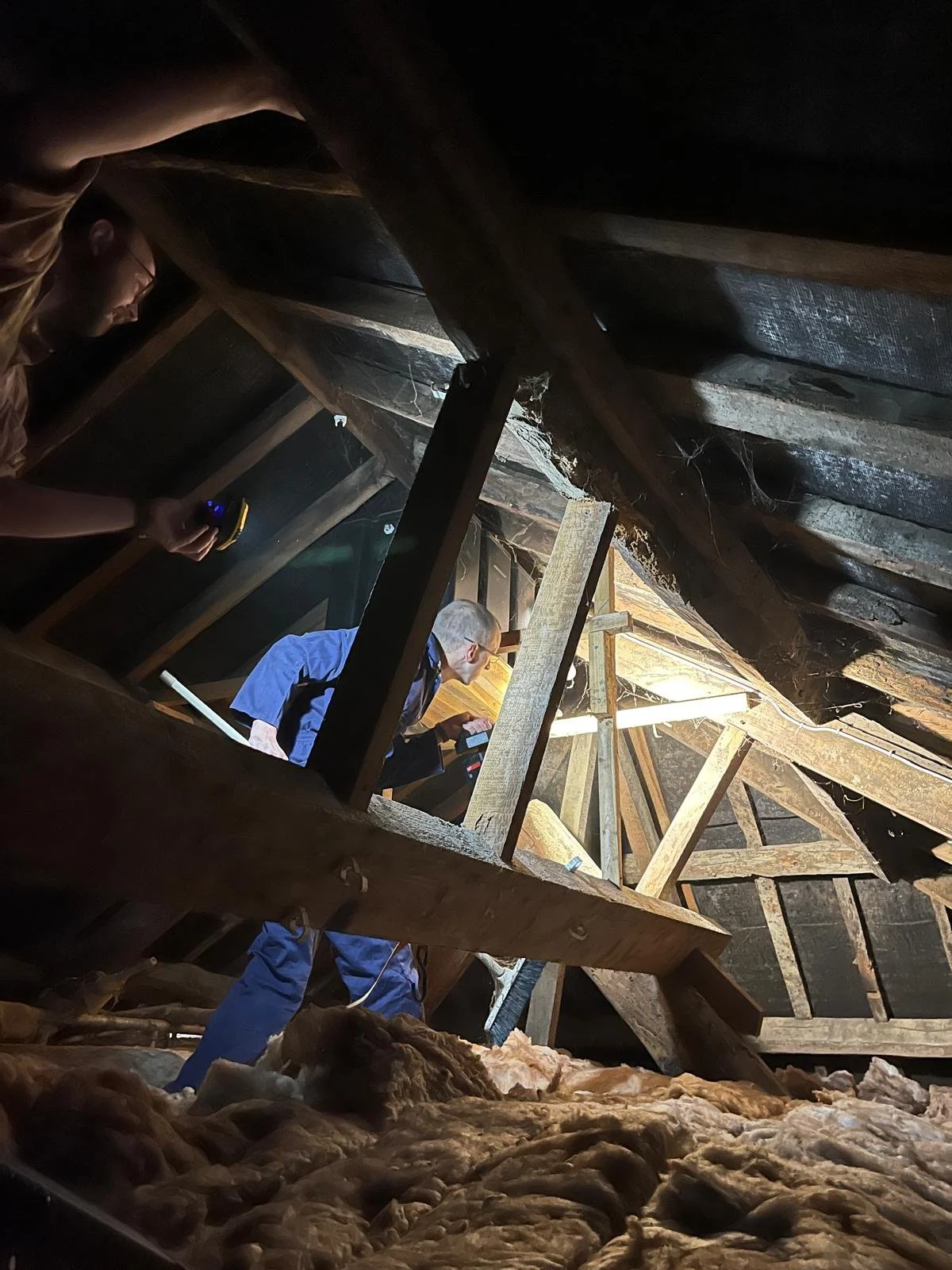
Dendrochronologist Ross Cook taking a sample in The Oxford’s attic
This is where dendrochronology comes in. Dendrochronology is the scientific method used to date the age of wood based on its growth rings. Behind the 19th-century stucco render on the front of The Oxford, the building’s much older timber frame is concealed. The first two storeys of this frame represent the “original” building, with the third storey being added later, we think sometime in the 18th century. When Ross and Glyn visited The Oxford on Tuesday 5th and Wednesday 6th May, it was largely this original timber frame that they were looking to sample. They were successful in finding many places where elements of it could be accessed, including in the attic where both the original roof and the later added roof beams are visible, as well as in various places under floorboards, in walls, and other areas across all three floors. Using specialist equipment, Ross and Glyn removed 16mm diameter cores from beams, taking over 30 samples in total.
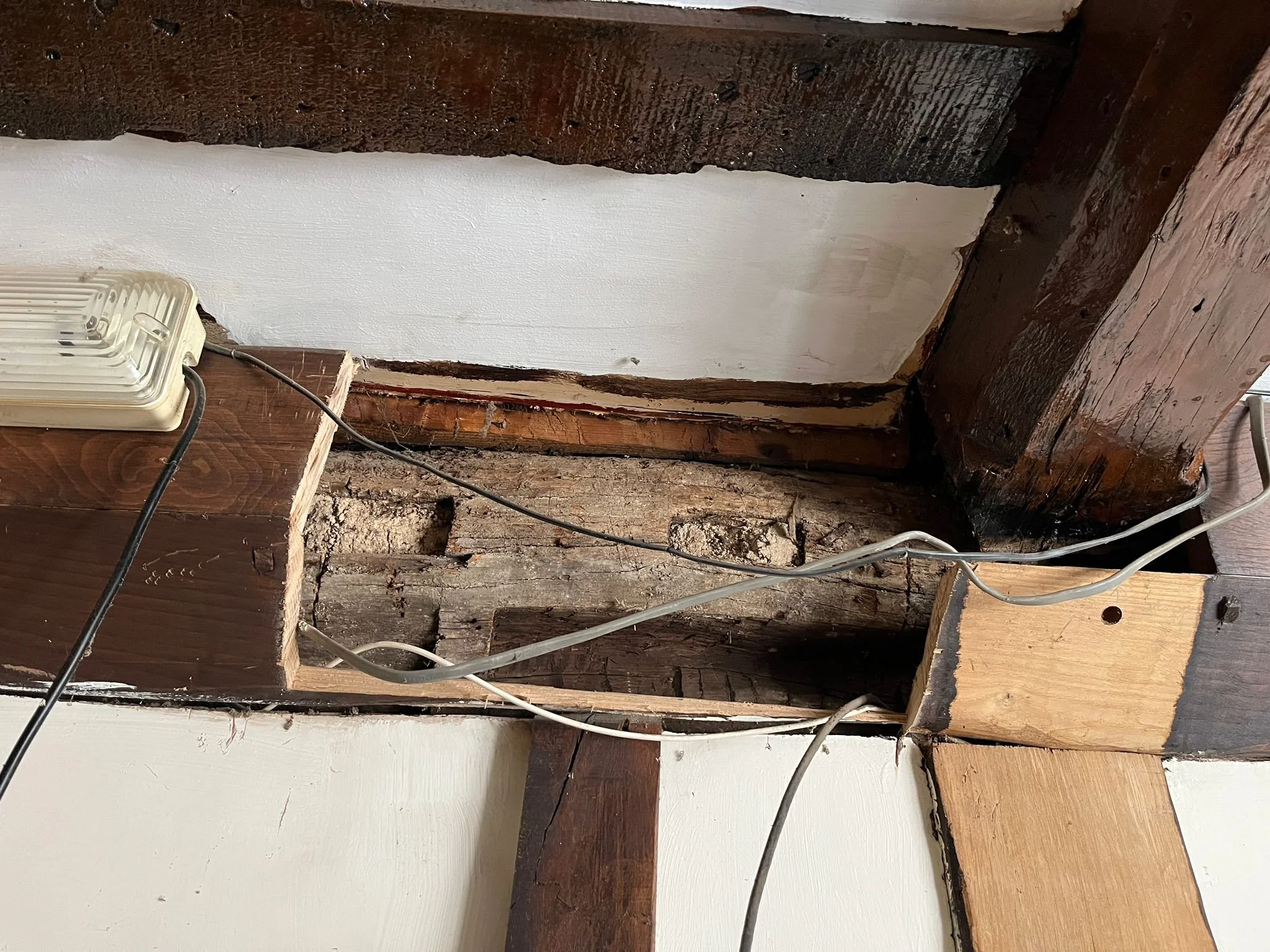
An original beam in the bar area at The Oxford, which had been boxed in during the 1990s
The samples will be cleaned, sanded, and scanned. Ross and Glyn will then try to cross-match the timber rings with databases to establish exactly when the timber was cut. It’s possible, but not guaranteed, that they can tell us the decade when the tree was cut; if the sample is very good quality, they may even be able to narrow down the date to the year and even the season! Oak used in timber framed buildings was typically installed while still green, so the date the tree was cut down is a good indicator of the year of construction.
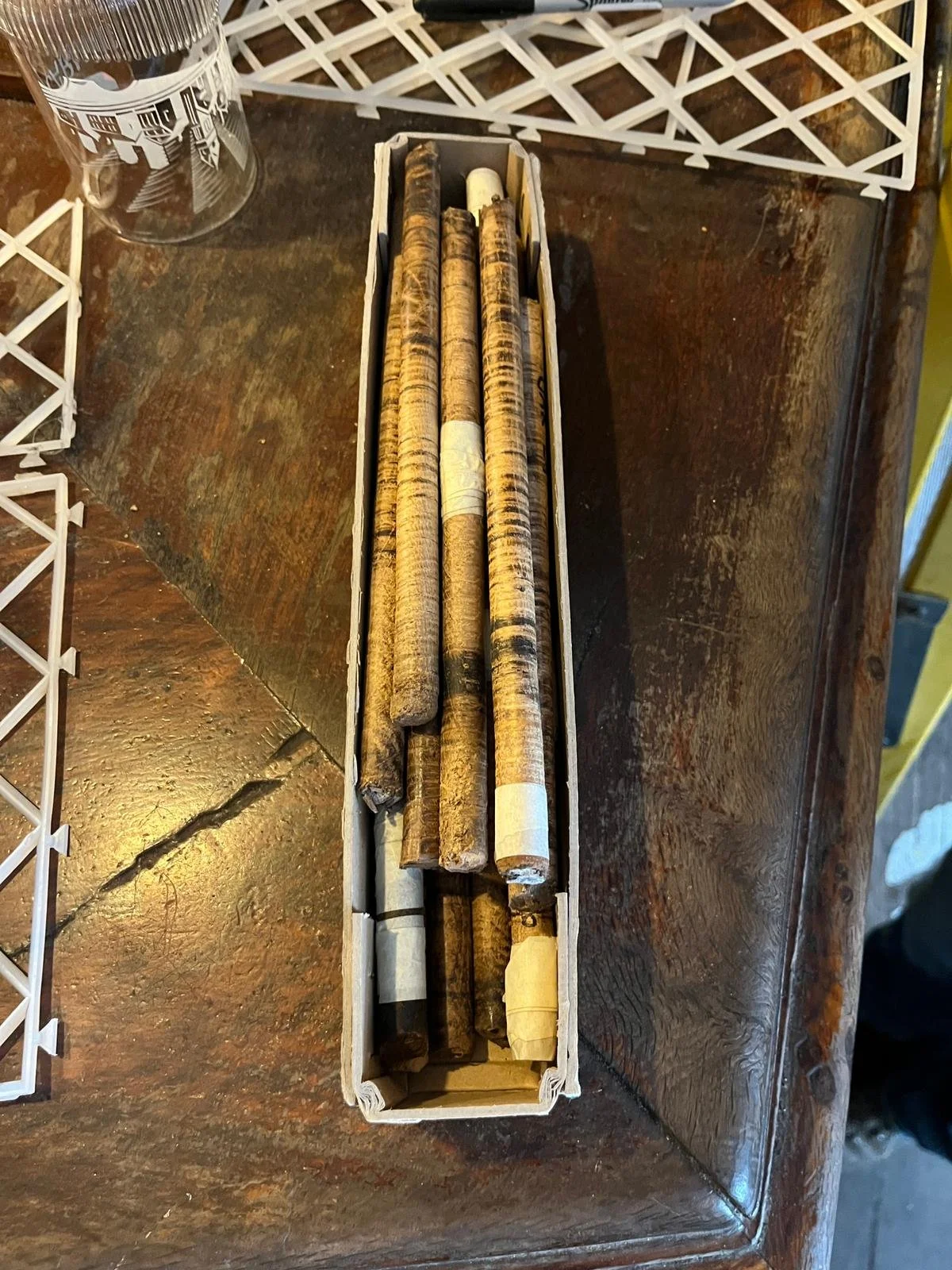
Samples removed from beams at The Oxford for analysis
Whilst Ross and Glyn’s work will hopefully yield a date for the construction of the old timber framed building entombed in The Oxford, as Ross pointed out, there may well have been an even earlier dwelling on the site! Ross and Glyn also took samples from the second floor and the more recently added roof, where pine has been used. We think the top storey and newer roof timbers were added in the 1700s, and Ross hopes to be able to tell us not only the date when the third storey was added, but also where the pine was imported from. We hope that this survey, which has been funded by The National Lottery Heritage Fund as part of our Development Grant, will allow us to put exact dates on the phases of construction of The Oxford, which in turn would help us to develop a much clearer sense of the building’s history and its value to Kington’s wider heritage. Watch this space for updates on the results as soon as we receive them!