
OAK Community Update - August
Over the course of the summer, Open Arms Kington have been working with specialists on trees living and dead to further explore The Oxford’s past and to understand implications for the future.
Starting with the oldest timbers at The Oxford—the original timber frame entombed within the walls, which has been covered up as the building has been redeveloped over the years—we now have an idea of the true age of the origins of the building. Dendrochronologists Ross and Glyn from Archaeodomus visited The Oxford back in May to take samples from the timber frames for tree-ring dating analysis. In our Community Update for May, we touched on the tantalising possibility that very good timber samples might give us a specific year, and even a season, in which the oak trees which provided The Oxford’s timber beams were cut down. The samples obtained weren’t of a suitable quality to provide this information, unfortunately, but we do have a rough date—the original two-storey building of The Oxford Arms, which includes the bar and restaurant areas facing onto Duke Street, was built in the early 1500s, most likely as a high-ceilinged open hall structure, before the first floor was added into the building soon afterwards, by the mid-1500s. That makes The Oxford a Tudor building, built in or around the era when Henry VIII reigned—much older than previously thought. The third storey appears to have been added in the 1700s and the timber frame of this section is constructed from pine. So we now know that the building is far older than many estimates had suggested but we don’t yet know if it was originally built as an inn, or had some other function - this we’re yet to determine!
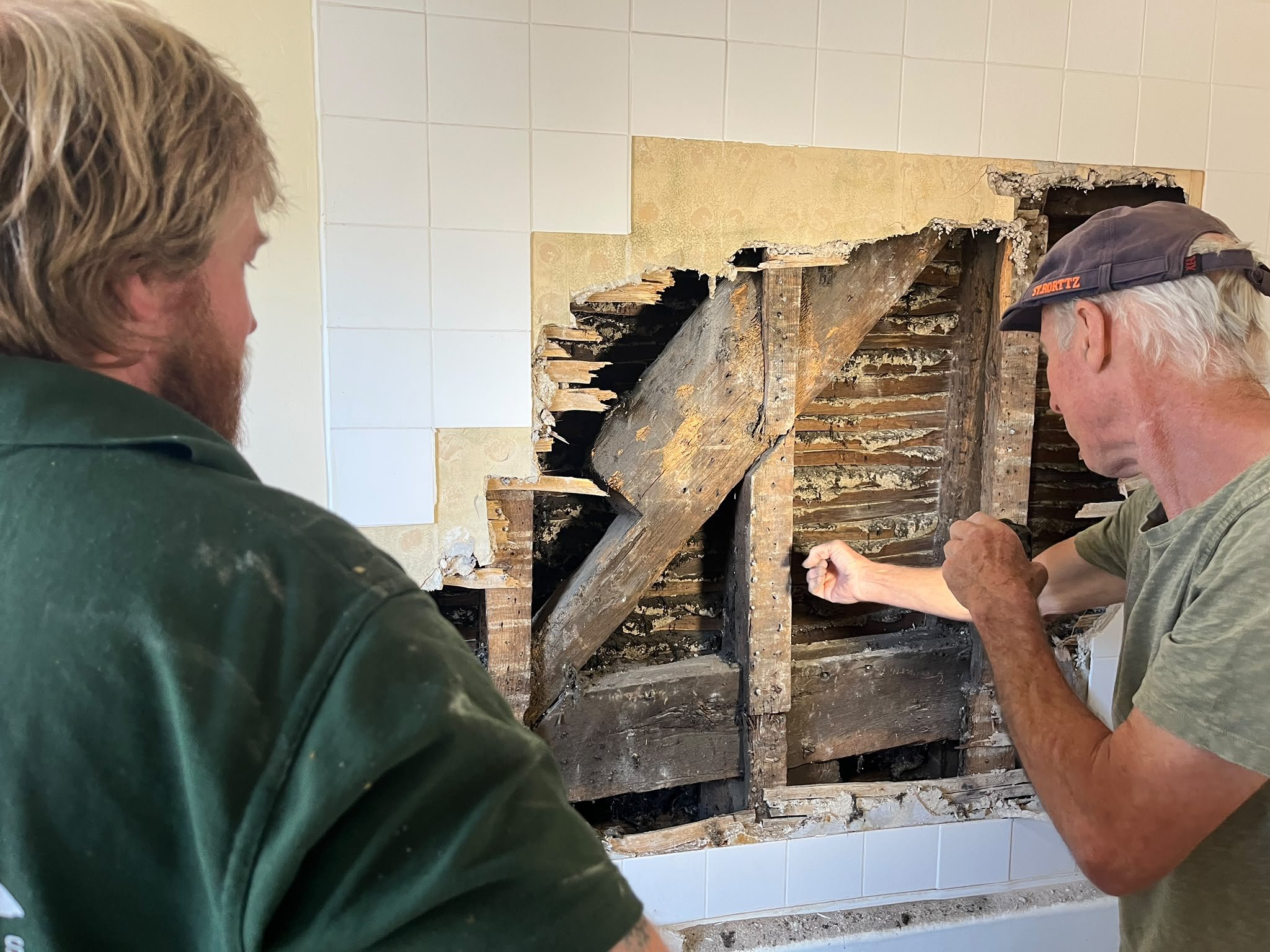
Jake Oakley and OAK volunteer Jim examine part of the original oak timber frame in one of The Oxford’s upstairs bathrooms
The historical value of The Oxford Arms is of significant importance not only to The National Lottery Heritage Fund, who are funding the development of our renovation plans, but also to Herefordshire Council, and we were instructed this summer by our Conservation Officer from Herefordshire Council to contract a timber-frame building specialist to expose key areas of the building in order to make a full assessment of the inner timber-frame structure. The aim of this is to ensure that any works we carry out in the future will preserve rather than damage the historically valuable core of the building. Jake Oakley from Oakley Frame Buildings visited The Oxford in July and, assisted by OAK volunteers John and Jim, he examined critical areas of the original structure, recording what he found. He was impressed by the scale of the original building and thrilled to find that so much remains intact. He has a follow-up visit planned and will then write his report. We look forward to sharing key findings with you! Watch this space for further updates on the historical investigations at The Oxford in forthcoming community updates.
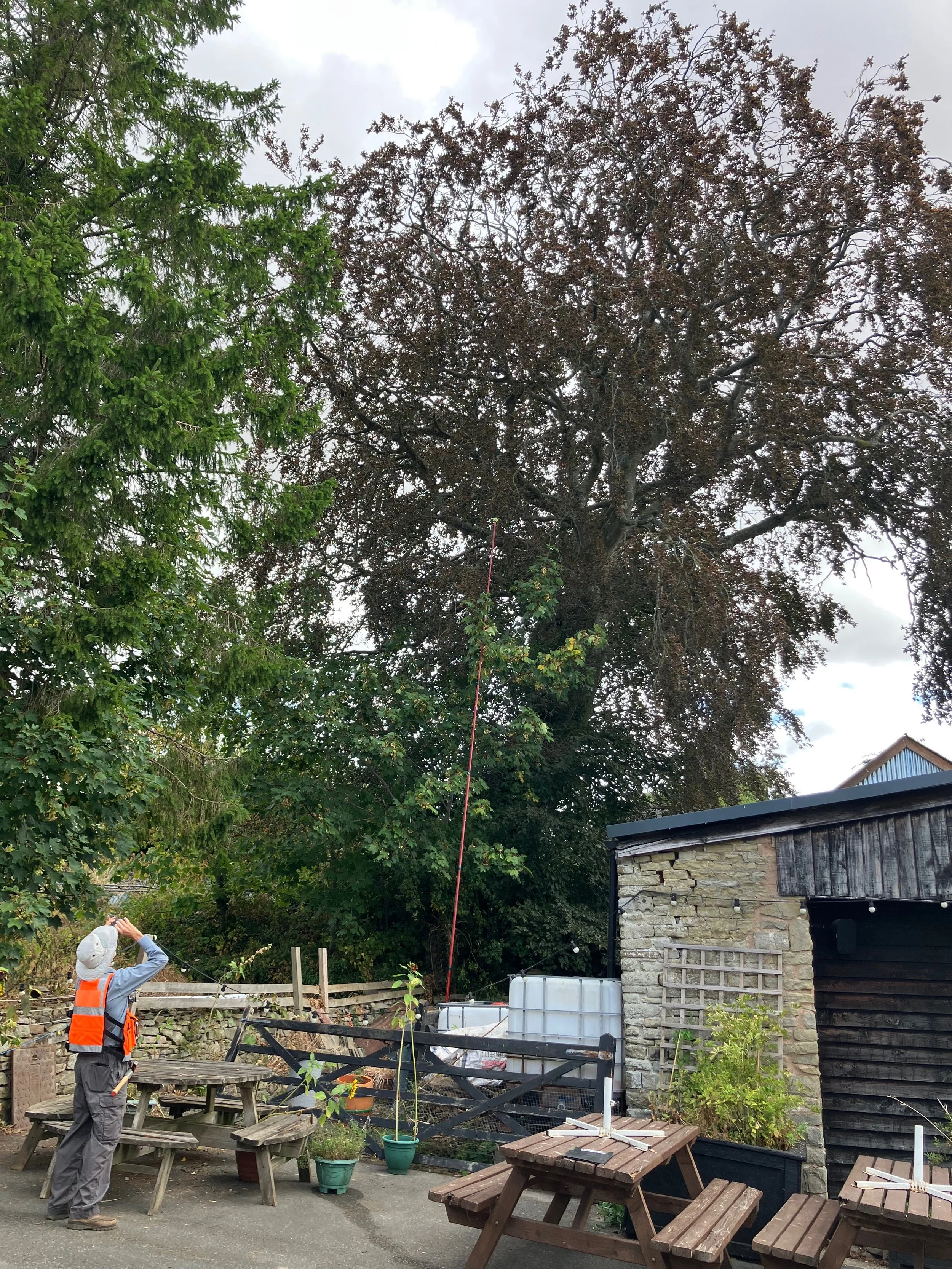
John Cromar checks the health of the large copper beech behind The Oxford’s barn
Back to the present, and to living trees, John Cromar of the Titley-based Treescan Arboricultural Company visited in mid-August to check on the health and potential safety risks of the magnificent copper beech tree that stands at the rear of The Oxford’s barn, just off Oxford Lane. Kington once had quite a few stately copper beeches of the same age, all planted by the Banks family in the 1800s, but a number have been lost in recent years. Copper beeches are prone to a number of fungal pathogens which can weaken the tree and make them unsafe. John’s initial assessment was, we’re happy to say, positive, and we hope that his final report will confirm that the tree remains safe and can overlook The Oxford for many decades to come.